Content lifecycle: from creation to publishing and archiving
16 April 2026
In many organisations, content is created every day. Images, video, documents and campaign materials are produced by different teams and used across multiple channels.
But when content lacks a clear structure across the entire lifecycle, problems quickly arise. Material is stored in different places, versions get mixed up, and it becomes difficult to know which content is up to date.
This is where the content lifecycle comes in. Content lifecycle describes how organisations manage content from the moment it is created to when it is published, used and eventually archived.
When organisations work in a structured way throughout the lifecycle, it becomes easier to stay organised and work more efficiently with content.
What is content lifecycle?
Content lifecycle is about how content moves through an organisation, from idea and production to publishing, usage and archiving.
A clear lifecycle perspective makes it possible to create structure in how content is managed, reduce duplicate work, ensure the right material is used, and make content easier to find and reuse. Instead of seeing content as individual files, organisations begin to treat it as part of a continuous workflow.
Step 1: Content creation
The content lifecycle begins when content is produced. This can include images from a campaign, video from an event, presentations, documents, graphics and marketing materials.
In many organisations, content is created by different teams or in collaboration with external agencies and producers. This makes it especially important to collect content in a way that makes it easy to find later.
Step 2: Organisation and structure
Once content has been created, it needs to be organised. Without structure, material risks ending up in folders or systems where it is difficult to find.
Organisations that work in a structured way with their content lifecycle often use:
metadata
categories
project or campaign structures
version control
This makes content searchable and easy to navigate.
Step 3: Publishing and usage
Once content is organised, it can be used across the organisation’s different channels. This can include websites, social media, campaigns, presentations and reports.
When content is structured clearly, it becomes easier for teams to find and use the right material in the right context.
Step 4: Content reuse
Many organisations create new content even though relevant material already exists. With a lifecycle perspective, it becomes easier to reuse content in new projects and campaigns.
For example, by reusing images from previous campaigns, editing video content for different channels, or updating documents instead of creating them from scratch.
This saves both time and resources.
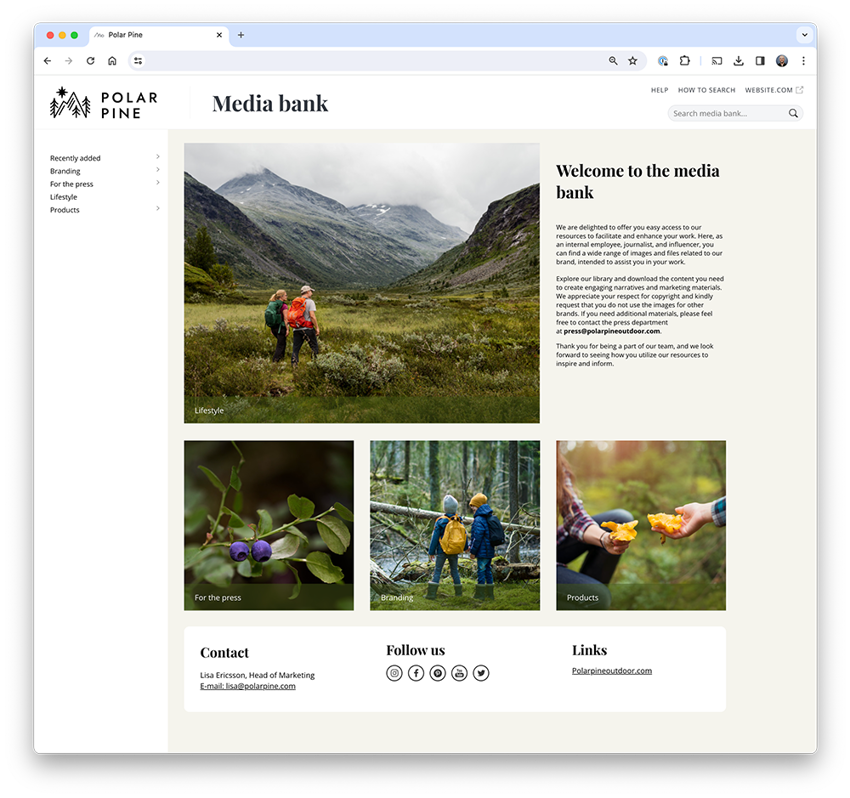
Create your own mediabank and share files internally or externally.
Step 5: Archiving and long-term management
Not all content needs to remain current forever. That is why archiving is an important part of the content lifecycle.
By archiving older material, organisations can retain historical content, reduce the amount of actively used material, and create a clearer overview of current files.
This makes it easier to keep the content library relevant and easy to navigate.
When the full lifecycle is connected
When organisations work in a structured way across the entire content lifecycle, content becomes easier to manage. Teams can find the right material faster, reuse content and collaborate more effectively.
Instead of content being scattered across different systems, it becomes part of a clear and consistent workflow.
A platform that supports the entire content lifecycle
For many organisations, the next step is to bring all content together in a Digital Asset Management platform (DAM).
Such a platform makes it possible to store images, video and documents in a shared library, organise material with metadata, make content searchable and accessible, and manage versions and archiving.
This enables organisations to create structure across the entire content lifecycle, from creation to archive.
Summary
The content lifecycle is about seeing content as a process rather than a collection of files. By working in a structured way with creation, organisation, publishing and archiving, organisations can gain better control over their content.
This makes it easier to work efficiently and ensure that content is used correctly over time.
Creativity and making things are often associated with freedom. Having space to experiment, think differently and work without constraints. Yet too little structure can, in practice, make creativity harder to achieve.
Since 2 August 2026, the EU AI Act has required that AI-generated and AI-manipulated content be clearly labelled. This applies above all to so-called deepfakes: images, audio and video created or altered with AI in a way that makes them appear authentic. It doesn't have to involve people; it could just as easily be a place, an environment or an event that looks real to the viewer.
We spoke with product manager John Robertsson about the features that have already launched and those still to come during the rest of 2026. After a run of releases early in the year, he promises the pace keeps climbing.