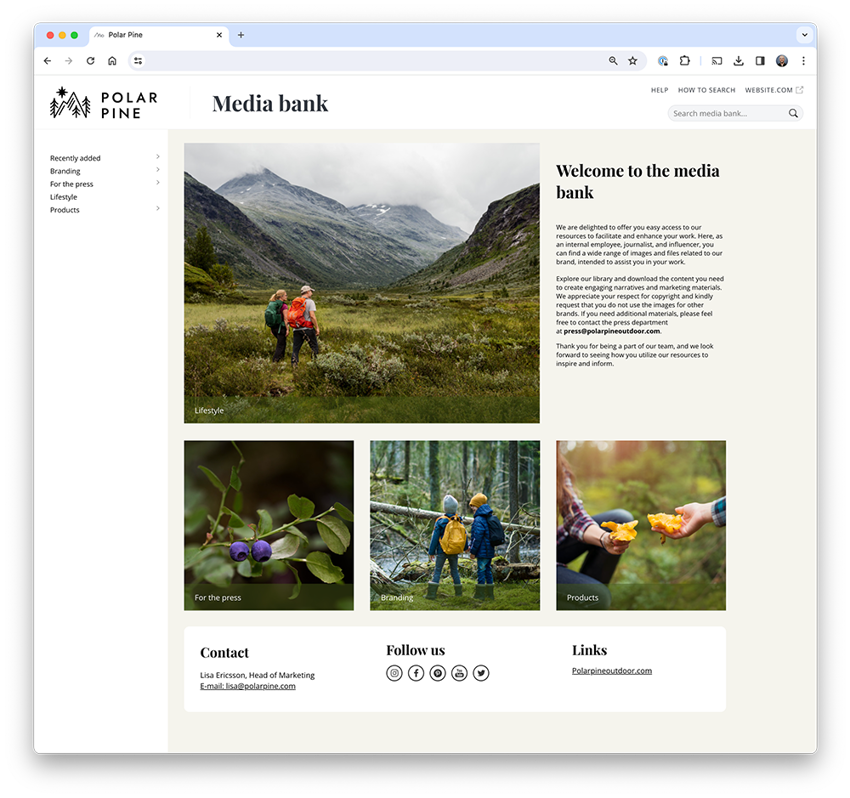
Image management should not be a manual project. With AI, you can automate time-consuming tasks and free up time for what actually creates value. From upload to finished material, less manual effort and more flow in your workflow.
When image management becomes a question of time, not resources
In many organisations, image management is still largely manual. Images need to be named, tagged, sorted and structured. Usage rights must be tracked. Versions need to be updated. And everything depends on someone doing it correctly, every time.
It works at first. But as the volume of content grows, so does the time required to manage it. Eventually, it is no longer just a question of structure, but of resources.
Without automation, image management continues to scale linearly with content. The more material you produce, the more time is needed to manage it, which over time slows down both speed and production.
AI takes over repetitive work
With AI in your media library, many of the tasks that previously required manual work can be automated. Instead of handling each image individually, the system can analyse and organise content on its own. This means you can:
get automatically generated tags based on image content
avoid manual sorting and categorisation
maintain structure without relying on specific individuals
The impact is visible from the moment of upload. AI takes over manual steps from the first image, making content searchable and structured without extra effort. The result is a more self-sustaining system where less time is spent on administration. You can still adjust or add tags when needed.
Structure without extra effort
A common challenge in image management is that structure requires discipline. Everyone needs to tag correctly, follow the same principles and think long-term in the moment.
AI changes these conditions. By automatically generating metadata and understanding image content, a foundational structure is created without the same level of manual effort. This keeps the media library consistent, even when many people are working in it.
Less dependent on individual workflows
When image management is manual, it also becomes dependent on individuals. How something is named, tagged or organised can vary. When someone leaves or changes roles, parts of that structure often disappear with them.
A system-driven approach creates a more consistent foundation that is not affected by individual working methods. This makes content more accessible to more people, regardless of who originally uploaded it.
From maintenance to usage
When less time is spent managing content, it also becomes easier to use it.
You no longer need to spend time “cleaning up” the media library and can instead focus on finding, adapting and publishing content.
This shifts image management from something that needs constant maintenance to something that actively drives your work forward.
Create your own mediabank and share files internally or externally.
Impact in practice
The impact of AI in image management is not just about technology, but about how the work actually changes in practice.
fewer manual tasks
faster access to the right content
more consistent structure over time
When the media library takes care of structure and organisation, it becomes easier for more people to work independently with content. This reduces the need for internal support and allows teams to spend more time on production, communication and creative work.
A media library that does more without requiring more
AI does not just change how image management works, it changes how much time it requires. When repetitive tasks disappear and structure is built automatically, the media library becomes a support system rather than a responsibility.
That is when you get more value from your content without needing to spend more time managing it.
Creativity and making things are often associated with freedom. Having space to experiment, think differently and work without constraints. Yet too little structure can, in practice, make creativity harder to achieve.
Since 2 August 2026, the EU AI Act has required that AI-generated and AI-manipulated content be clearly labelled. This applies above all to so-called deepfakes: images, audio and video created or altered with AI in a way that makes them appear authentic. It doesn't have to involve people; it could just as easily be a place, an environment or an event that looks real to the viewer.
We spoke with product manager John Robertsson about the features that have already launched and those still to come during the rest of 2026. After a run of releases early in the year, he promises the pace keeps climbing.