How organisations share images and video externally without losing control
16 April 2026
Sharing content externally should be simple. But without control, it quickly becomes messy, difficult to manage and a risk to your brand. With the right structure, you can make content accessible while ensuring that what is used is up to date, approved and represents your organisation in the right way.
When sharing creates uncertainty
The need to share images and video externally is constant. Press teams, partners and resellers need quick access to material. Yet in many organisations, this still happens through email, open links or folders without a clear structure.
This is where the problems begin. Content is shared without control. Old versions remain in use. Images are used in the wrong context. And it becomes difficult to know who actually has access to what.
What was meant to simplify things ends up creating uncertainty.
From scattered files to controlled distribution
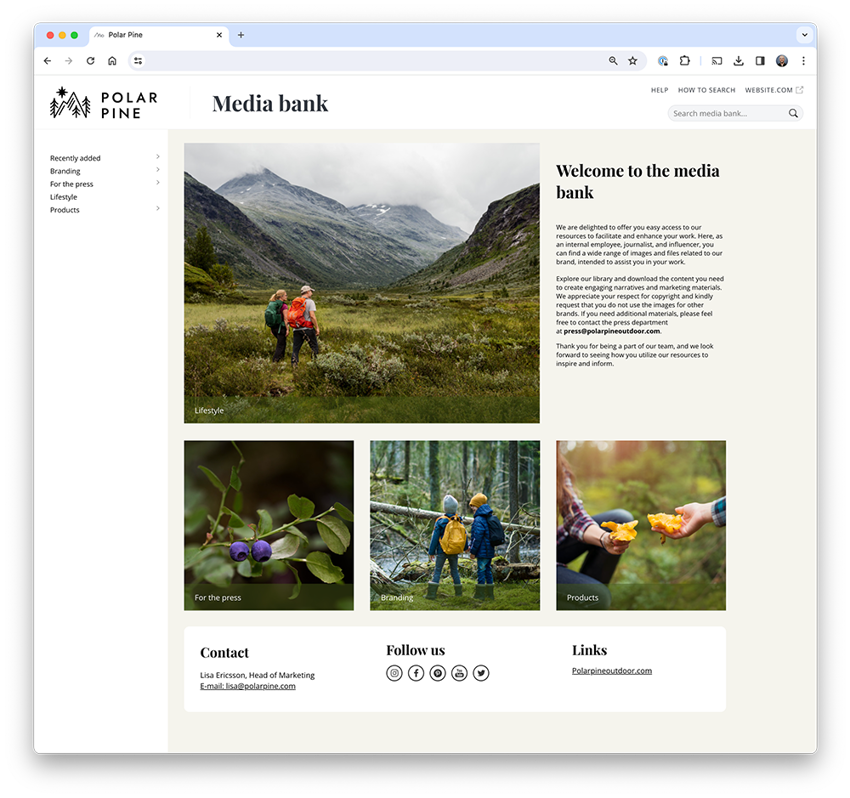
The solution is not to share more files, but to share them in the right way. With a media portal, you create an external space where selected content from your media library is presented in a structured, ready-to-use format. Instead of sending files, you provide access to them. Learn more about how a media portal works in practice here.
This allows recipients to find what they need themselves, while you maintain control.
Control over both content and brand
When content is shared externally, it is not just about access, but about how your brand is actually represented. With a structured approach, you can ensure that:
the right images are used in the right context
outdated or incorrect versions do not continue to circulate
only approved material is available
This means you are not just sharing content, you are controlling how your organisation is represented.
Always the right version, without extra effort
One of the biggest challenges with manual sharing is that content quickly loses its connection to the source. Once files are sent, they become difficult to control.
With a media portal, that connection remains. When you update an image or remove material, the change is reflected instantly. What is available is always up to date. You no longer need to track versions and can trust that the right material is used from the start.
Easy access with clear boundaries
External sharing should feel simple for the recipient, but secure for you.
With the right structure, you can control access without it being noticeable. Content is easy to access, but not freely shared without control. This is where the balance lies between accessibility and governance.
One example is Söderhamn Municipality in Sweden, which has created a way of working where material can be easily shared both internally and externally without losing control over structure or usage rights.
Create your own mediabank and share files internally or externally.
From manual sharing to a working flow
When content is made available in the right way, the entire way of working changes. You no longer need to handle every request. There is no need to send files, answer follow-up questions or manage versions.
Instead, the material is already there, ready to use. This saves time, reduces interruptions and allows more people to work independently with the content.
When sharing becomes a strength, not a risk
External sharing will always be an important part of working with images and video. The difference lies in how it is done.
When you move from sending files to sharing structured content, you gain both control and accessibility. You can be confident that the content being used is correct. That is when sharing is no longer a risk, but a strength in how you manage your content and your brand.
Creativity and making things are often associated with freedom. Having space to experiment, think differently and work without constraints. Yet too little structure can, in practice, make creativity harder to achieve.
Since 2 August 2026, the EU AI Act has required that AI-generated and AI-manipulated content be clearly labelled. This applies above all to so-called deepfakes: images, audio and video created or altered with AI in a way that makes them appear authentic. It doesn't have to involve people; it could just as easily be a place, an environment or an event that looks real to the viewer.
We spoke with product manager John Robertsson about the features that have already launched and those still to come during the rest of 2026. After a run of releases early in the year, he promises the pace keeps climbing.